Silver Pines Combat Guide: Boxcutter, Revolver and Dodge
Silver Pines combat explained: the boxcutter's three attacks, knockback stagger, why you cannot move while swinging, revolver reloading, and dodge or backstep.
FAQ
What are the boxcutter attacks in Silver Pines?
Why can't I move while attacking in Silver Pines?
Is the missing crosshair in Silver Pines a bug?
How does dodging work in Silver Pines?
Why did dodging feel bad in the Silver Pines demo?
How does combat work in Silver Pines?
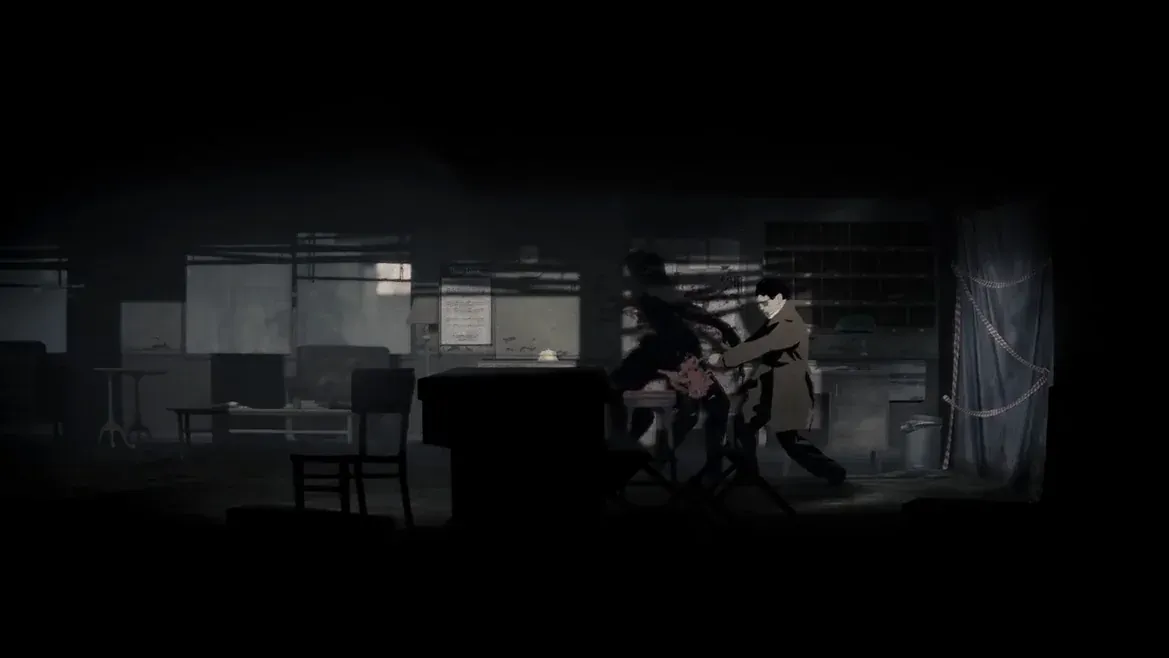
Combat is about commitment, not reflexes. Every attack locks Red in place for its duration, enemies stagger backwards when you connect, and your stamina bar is short enough that two dodges in a row is a real decision. IGN described the action as intentionally slow and imprecise, with a long cooldown, slow reloads and a protagonist who is not a fighter.
The design intent is stated openly by the developers. Mattias Snygg said the team wanted fighting to feel easy to understand and get into, while being one component of a larger set of things you do. Linus Larsson framed it from the other side: every encounter should cost you something, whether that is health, ammunition or inventory space.
That means the best fight is usually the one you do not take. This page covers how the tools actually work so you can decide when a fight is worth its price. The resource side of that equation lives in the inventory guide.
What are the three boxcutter attacks?
The boxcutter is your first weapon and your only melee option for the opening stretch. It has three distinct attacks, and most players never use more than one of them.
| Attack | How to trigger | When to use it |
|---|---|---|
| Normal swing | Standard attack input | Weak enemies, finishing a staggered target |
| Charged attack | Hold the attack input, then release | Bugs, opening a fight, staggering a bigger enemy |
| Running attack | Attack while moving at speed | Closing distance on a fleeing or distant enemy |
The developer nudged players toward the third one in a Steam Community thread with a single line: give the running attack a try. That line exists because players were not finding it, and it is worth testing early against a lone bug rather than discovering it during the boss.
Against the demo’s bugs, one charged attack is reportedly enough to kill. That makes charging the most efficient opening move in nearly every fight, since it ends the encounter in one commitment window instead of three.
Why can’t I move while swinging?
Because the swing locks Red in place, and taking a hit locks him too. This is not input lag. The lock is the cost of the attack, and it is what makes the charged attack a decision rather than a formality: you are trading the ability to reposition for a chance to end the fight immediately.
The practical rules that follow are simple. Never start a swing when a second enemy is already inside your reach. Never swing to finish a target that is about to be knocked down by an ally’s attack. And never swing when your stamina is empty, because you cannot dodge out of the recovery.
Do hits stagger enemies?
Yes. Landing a melee hit produces knockback, which shoves the enemy backwards and interrupts what it was doing. Knockback is the closest thing the game has to a defensive tool in melee, and it is the reason a well-timed charged attack can turn a two-enemy fight into two separate one-enemy fights. Enemies also have knockdown and getting-up animations, and later patches tuned the death animation for the case where you kill something mid-recovery.
If you are being crowded, the correct sequence is not to mash the attack button. It is to create space first, then land one committed hit that pushes the nearest enemy away from the group.
How does the revolver reload work?
Slowly, on purpose. The .36 Revolver reloads one shell at a time, and you physically push each round into the cylinder. There is also a circular button-prompt timing minigame on top of the animation, which Finger Guns compared to the skill-check minigame in Dead by Daylight, while Shacknews compared it to active reload systems elsewhere. Hitting the prompt correctly matters, and fumbling it costs you time you may not have.
Three habits make firearms usable. Reload before a fight starts, never during one. Count your shots out loud if you have to, because running dry mid-encounter is fatal at this pace. And accept that a missed shot is a permanent loss, since the demo’s ammunition is scarce and there is no way to recover a spent round.
[!warning] Do not waste bullets on scenery The revolver can shoot padlocks off containers and blow out wooden vent grates, and one of those vents hides an inventory upgrade. It cannot break concrete walls or rock faces. Players have lost shotgun and revolver ammunition testing exactly that. The developer later said the full game gives you a more direct, cheaper way to break locks and boards once you reach town.
How do you dodge through enemies?
Dodge moves Red through enemies and obstacles rather than around them, so it functions as an escape rather than a sidestep. That is what makes it useful: when an enemy commits to an attack, you dodge into and past it, and you end up behind the attack rather than inside it.
If you press dodge while standing still, you get a backstep instead, a short hop backwards that costs very little. A player who worked this out posted the resulting method, and it is the best general advice on the demo’s Steam forum: dodge into a moving enemy is risky, so backstep first to save durability and health, then dodge through if you still need distance. The same player noted that dodging past an attack from a standing start is not recommended.
| Defensive option | What it does | Cost |
|---|---|---|
| Dodge | Passes through enemies and obstacles | Meaningful stamina |
| Backstep | One step backwards from standing still | Very low stamina |
| Crouch walk | Sneaks past occupied enemies | None |
| Charged melee | Staggers the target backwards | Weapon durability |
Is the missing crosshair intentional?
Yes, and the developer said so directly: “You can’t run and gun, aim freely, or rely on an aim reticule or crosshair. All of this is intentional.” Aiming also locks Red in place, so the shooting model is closer to a fixed turret than to a modern twin-stick or over-the-shoulder shooter.
The reasoning connects to the character. The developer added that Walker is not an action hero, and that missing shots and having to commit to your aim are part of what creates tension. Snygg made the same point from the resource angle: finding two extra shotgun shells should feel like winning the lottery.
Players have asked for an optional crosshair or flashlight in a dedicated Steam thread, and the request has not been granted or promised. Treat the absence as the design, and adjust your aim before you commit rather than during.
[!tip] Aim, then commit Because aiming freezes Red, set your facing before you pull the trigger. Turning and shooting at the same time is the single biggest source of wasted bullets for new players on keyboard and mouse.
How do you sneak past enemies?
By crouching behind an enemy that is occupied. A developer reply confirmed the rule in plain terms: enemies that are occupied can be snuck by using crouch. Occupied means the enemy is locked into an animation or otherwise distracted, which gives you a window to walk behind it.
This is the highest-value skill in the demo because it costs nothing. No durability, no ammunition, no healing, no stamina. If you are trying to conserve resources for the tunnel boss, crouch-walking past three encounters is worth more than any weapon upgrade. The combat guide for bosses covers which enemy types this works against.
One enemy reportedly breaks the rule: the humanoid in the pool changing rooms, which has no door to close and will follow you out. Plan a fight there rather than a sneaking route.
Why do I get hit during door transitions?
Because the door animation locks you in place, and enemies on the other side do not respect it. Players have reported being unable to react while a door transition plays, which is especially painful when something is waiting on the far side. There is no confirmed fix in the demo.
Treat every doorway you have not used yet as a potential ambush. Approach with health to spare, and if you have already cleared the room behind you, consider backing out and re-entering rather than pushing through blind.
Why did dodging feel bad in the demo?
The cause was found by the developers and it was mundane. In a Steam Community thread, they explained that Walker’s coat strap actually had collision, which made his collision box a lot bigger while dodging. In other words, the dodge was not failing, the hitbox was bloating at the exact moment you needed it small to fit through an enemy or a gap.
That root cause has been addressed, and dodge invulnerability frames were retuned at the same time. If you played the demo early and wrote dodge off as broken, it is worth retesting after the patches. Boss-side hitboxes were also tightened, which is covered in the tunnel boss guide.
Official source: Silver Pines on Steam describes encounters as tense and dangerous, with hulking bosses and a large variety of monsters.
Related
Related Articles
bosses
Silver Pines Bosses: Every Boss Fight and Enemy Type
Every boss fight and enemy type confirmed in the Silver Pines demo, how far each community name can be trusted, and the one officially named enemy.
bosses
Silver Pines Tunnel Boss Guide: How to Beat the Demo Final Boss
How to beat the Silver Pines tunnel boss, the demo's final fight, including the shadows, the developer-confirmed demo problems and the community no-damage pattern.
guides
Silver Pines Beginner Guide: First Hour Tips and Systems
A Silver Pines beginner guide to the opening diner, the camera, coins, crouch stealth, the short stamina bar, healing animations and demo length.
Was this helpful?
Thanks for the feedback!